Wednesday, November 27, 2019

Replacement Toilet Lids and Seats - Couple in Their Seventies Invents a Backrest for the Toilet -This Old Toilet 650-483-1139


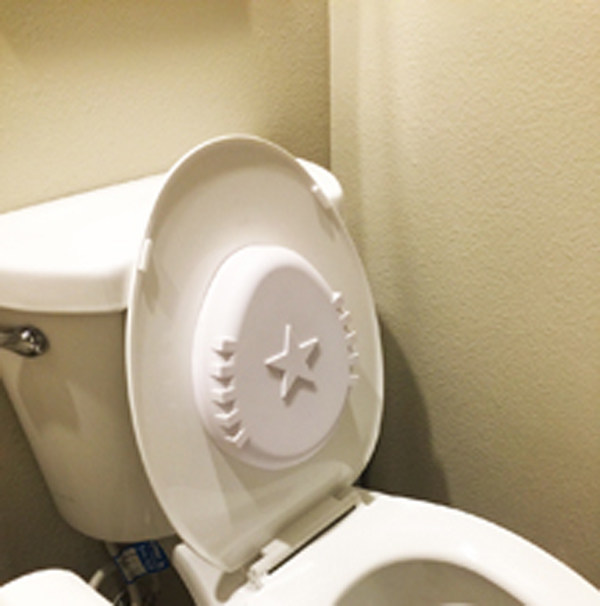
Throne Daddy marshmallow-soft backrest turns the toilet into a comfortable chair

What if your toilet could feel more like a comfortable chair? Well, now it can, according to Dennis and Mary Lou Green of Dennis Green Design Group, inventors of the Throne Daddy; a marshmallow-soft lumbar support that easily attaches to the toilet seat lid.

"I have a herniated disk in my lower back and always wished I could find a lumbar support for the toilet," says Dennis. "Then, one day it hit me, 'We're inventors, why shouldn't we invent a solution?'" Mary Lou added, "First, we asked friends how they sit on the toilet. That prompted nervous laughs and loads of toilet humor."
Next, they posted questions on Quora and their Throne Daddy Facebook page and discovered that men mostly sit forward on the toilet with elbows on knees to read. They don't lean back because the toilet seat lid is too far back and too hard, plus many lids have a rim around the edge that cuts into their backs. Throne Daddy solves those problems. Women, on the other hand, are more likely to perch on the seat. They get in and get out, spending less time reading on the toilet. See more here.
Medical research shows sitting forward on the toilet causes legs to go to sleep. Throne Daddy puts the body in the proper ergonomic position to ease that problem.
The Greens read complaints about their idea on their Facebook page from women who felt their husbands already spent too much time in the bathroom and didn't need something to make their hideout more comfortable. "Next he'll want a beer tap in there." Other women argued if they could make their partner more comfortable, they were all for it, "Better they hide out an extra ten minutes in the bathroom than five hours on the golf course."
by Dennis Green Design Group
Http://www.thisoldtoilet.com

Wednesday, November 20, 2019

Replacement Toilet Lids and Seats - Smart toilet could help in healthcare -This Old Toilet 650-483-1139


Image result for smart toilet


Smartphones. Smartwatches. What’s next? Smart toilets?!
Yes, the future of flushing is almost here!
“So we got very interested in the toilet,” Josh Coon, a Biomolecular Chemistry Professor, said.
“Some people think we’re crazy but I think we’re on to something,” Ian Miller, a Staff Scientist, said.
In most workplaces, “toilet talk” is frowned upon.
“Now we need to put that technology in the toilet and we need to make it broadly available,” Coon said. 
For researchers at UW Madison, flushing is the future.
“Our toilet, our smart toilet will have a collection container in the front and then we can have pipes coming out the bottom which will pump the urine away for analysis in our mass spectrometers,” Ben Anderson, a UW Madison Student said.
Doctors say urine samples are non-invasive and can tell a lot about a person’s overall health. By collecting and processing this data, they’re calling a toilet revolution.
“The opportunity to revolutionize toilets once again by allowing it to not just dispose of waste but to give you access to your health information,” Anderson said. 
Data from the toilet can show caffeine or alcohol intake or how your body metabolizes certain medicines.
“But this way you could monitor that throughout the course of your life daily and we think that could really change healthcare and preventative medicine,” Coon said. 
Scientists are programming the potty to compile the information as a smartwatch would.
“I think the reason the watch is so powerful is because you don’t have to do anything different, people wore watches before but all of the sudden we have access to this data,” Miller said. 
Modernizing even the most private of places.
By being able to look at an actual bodily fluid with this sort of resolution, we can get a peek inside the body,” Anderson said. 
The team says they’re about three months from a working prototype.
They’re planning another study over the next year analyzing how the technology functions.
by: CNN Newsource

http://www.thisoldtoilet.com 

Wednesday, November 13, 2019

Replacement Toilet Lids and Seats - World Toilet Day -This Old Toilet 650-483-1139


Image result for cool toilets


World Toilet Day (WTD) is an official United Nations international observance day on 19 November to inspire action to tackle the global sanitation crisis.[1][2] Worldwide, 4.2 billion people live without "safely managed sanitation"[3] and around 673 million people practise open defecation.[3] Sustainable Development Goal 6 aims to achieve sanitation for all and end open defecation.[4] World Toilet Day exists to inform, engage and inspire people to take action toward achieving this goal.
World Toilet Day was established by the World Toilet Organization in 2001. Twelve years later, the UN General Assembly declared World Toilet Day an official UN day in 2013.[5]
UN-Water is the official convener of World Toilet Day. UN-Water maintains the official World Toilet Day website and chooses a special theme for each year. In 2019 the theme is 'Leaving no one behind', which is the central theme of the Sustainable Development Goals. Themes in previous years include nature-based solutions, wastewater, toilets and jobs, and toilets and nutrition.[6][7][8] World Toilet Day is marked by communications campaigns and other activities. Events are planned by UN entities, international organizations, local civil society organizations and volunteers to raise awareness and inspire action.
Toilets are important because access to a safe functioning toilet has a positive impact on public health, human dignity, and personal safety, especially for women.[9] Sanitation systems that do not safely treat excreta allow the spread of disease.[3] Serious soil-transmitted diseases and waterborne diseases such as cholera, diarrhea, typhoid, dysentery and schistosomiasis can result.


http://www.thisoldtoilet.com

Wednesday, November 6, 2019

Replacement Toilet Lids and Seats - CLIMATE CHANGE MAY TAKE AWAY YOUR ABILITY TO FLUSH THE TOILET -This Old Toilet 650-483-1139


A new United Nations report states that rising sea levels could render as many as 60 million toilets inoperable in the United States alone, as traditional septic systems are threatened by increased groundwater.
About 1 in 5 American households rely on septic systems to handle their toilet waste, according to the Environmental Protection Agency. These systems work by draining flushed toilets into an underground tank, where bacteria breaks it down into water and solid sludge. That water moves through an outflow tube into a drainage field.
However, as sea levels rise, those drainage fields are becoming saturated, preventing them from absorbing liquid from septic tanks. In addition, erosion removes the necessary soft earth to filter out pollutants, resulting in public health hazards and groundwater contamination.
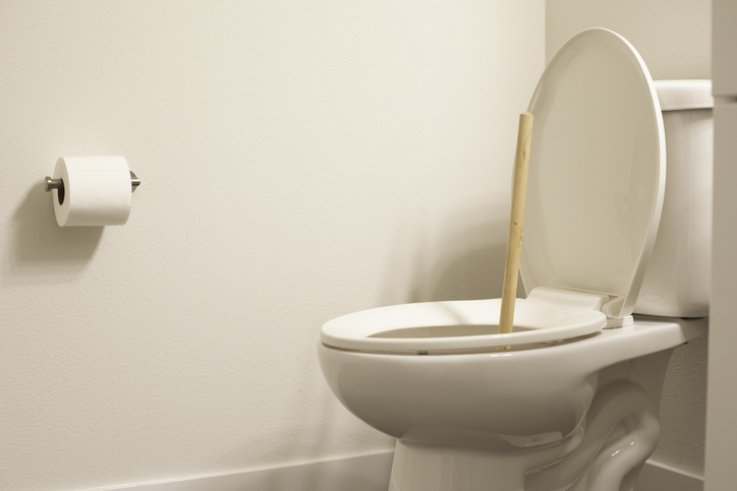
Toilet with plunger
Toilet with plunger in bowlGARRETT AITKEN / GETTY IMAGES
Rebeca Sosa, vice chairwoman of the Miami-Dade County Commission, commissioned a report on how climate change would affect her constituents' septic systems.
"Sea level rise is not a registered voter," Sosa told KTLA. "It doesn't have a party. It's something that is going to affect everyone. Our job right now is to make sure that we make the state and the federal government understand ... that we need help, so we can help those who are not going to be able to pay to have sewer lines."
That report indicated that 64% of the tanks could break within the next 25 years, requiring annual repairs to continue operating.
Earlier in September, Sosa sponsored two pieces of legislation to help transition Miami-Dade County away from septic tanks and towards municipal sewer systems, which collect waste from multiple homes through underground pipes and clean it at a filtration plant. Other options for rural areas include elevated septic systems that do not depend on drainage fields.
Florida is home to 15% of the country's septic systems, and its low-lying geography makes it especially vulnerable to changes in sea level.
The bedrock of much of the state is porous limestone, which allows seawater to reach inland quickly and raises the underground water table at a similar rate as the Atlantic Ocean. Traditional barrier methods like sea walls are ineffective at preventing groundwater rises.
The state's sea level has risen in some areas as much as eight inches since 1950, and current projections have it increasing by an inch every three years. The U.S. Army Corps of Engineers is predicting an additional 15 inches of rise by 2050.
Doug Yoder, deputy director of the Miami-Dade Water and Sewer Department, told CNN his office has been working on ways to mitigate sea level rise for 30 years.
"This water management system is probably one of the most complex anywhere in the world," he said. "We are in a place where the ocean is directly connected to our shallow groundwater system. As sea level rises, which it is clearly doing, it is going to affect our ability to both protect our drinking water supply and protect the built environment."
Florida is not alone in contending with climate change and septic systems. The Minneapolis Star-Tribune published a piece in March 2018 explaining how a decline in insulating snow in the winter months drove the frost line below tank levels, causing them to freeze up and stop working.
http://www.thisoldtoilet.com

Wednesday, October 30, 2019

Replacement Toilet Lids and Seats - Don't flush your medication down the toilet -This Old Toilet 650-483-1139

Image result for prescription bottles empty in toilets

This Saturday, October 26, is National Prescription Drug Take Back Day, a chance to get rid of unwanted, unused and expired medication.

The Northeast Ohio Regional Sewer District (NEORSD) is reminding people that they should take their medications back through one of these events, rather than flushing medication down the toilet.

Why not?
“People always used to tell everyone to just flush your medication, because when you flush something you think, ‘Oh, it just goes away.’ But you don’t realize where it goes,” said Jenn Elting of the Northeast Ohio Regional Sewer District.

Elting said wastewater treatment plants can remove a lot of things during the treatment process, including flushable wipes, which shouldn’t be flushed in the first place.

However, “we cannot remove medication from the wastewater,” Elting said. “So it goes through the treatment process and ultimately it does go back out into Lake Erie.”

Lake Erie is also the water supply for many drinking water plants, which can’t remove all the pharmaceuticals from the water during their treatment processes. That means medication and other compounds can end up in the water we drink.

“It’s definitely important that you take responsibility for the products and the things and the waste that you’re generating on your own,” Elting said. “So you definitely don’t want to flush prescription medications.”

She added that people also shouldn’t flush paper towels, fats and greases or “anything that can harm not only the sewer system but can harm your own personal plumbing as well.”

Compounds found in the water
Dr. Jen Mou is a researcher and associate professor at Kent State. She spoke to News 5 in late August about her research on PPCPs, or pharmaceutical and personal care products, that end up in the water we drink. That includes not only prescription and over-the-counter medications, but also products such as bug spray and sunscreen.

Her research centered on four different water treatment plants and searched for different compounds that end up in the raw water supply or source water.


She noted that there are different ways in which these compounds can enter the water.


“Because humans use different kinds of medicine, just through our digestive system there will still be a lot of residues that will be released through our feces and urines into the toilet,” Mou said.

She said throwing medication in the trash or down the toilet could also result in pharmaceuticals getting into the water, as well as surface runoff from farm animals’ excrement.

Mou described the issue as an “emerging concern.”

“They may not have immediate impact to human or wildlife health,” Mou said. “However, we do not know the long-term, chronic impact of those low-concentration compounds in the water.”


http://www.thisoldtoilet.com

Wednesday, October 23, 2019

Replacement Toilet Lids and Seats - Three new arrests in the case of the stolen gold toilet -This Old Toilet 650-483-1139

Image result for gold toilet

Police investigating the theft of a solid gold toilet from a stately home in the UK made three arrests Wednesday.

"A 35-year-old man, a 34-year-old man and a 36-year-old woman, all from Oxford, were arrested on suspicion of conspiring to commit a burglary," Thames Valley Police said in a statement. All three remain in police custody.

The fully functioning toilet is a piece of art made entirely from 18-karat gold that was installed in Blenheim Palace, England as part of an exhibition by Italian artist Maurizio Cattelan.

Police have been investigating its theft since it was stolen on September 14 and previously made two arrests.

A 66-year-old man was arrested on suspicion of burglary before being released on bail, and a 35-year-old man was arrested on suspicion of conspiracy to burgle and was released under investigation.

The fully functioning solid gold toilet, made by Italian artist Maurizio Cattelan, was stolen on September 14.
The fully functioning solid gold toilet, made by Italian artist Maurizio Cattelan, was stolen on September 14. Credit: WILLIAM EDWARDS/Getty Images


In early October, police released CCTV images of a vehicle they believe was involved in the theft at the palace, which is open to tourists.

And details of a reward of up to £100,000 ($124,000) for the return of the artwork were released.

Philip Austin from Fine Art Specie Adjusters (FASA), the palace's insurance company, told CNN that a reward of up to £100,000 would be paid if specific conditions were met.

First, the item must be safely returned; second, there must have been an arrest as part of the investigation.

"We have to be very careful that we don't pay the villains," he said.
Back in August, in an interview with the UK's Times newspaper, Edward Spencer-Churchill, the current Duke of Marlborough's half-brother and founder of the Blenheim Art Foundation, dismissed the possibility that the toilet could be stolen.

"It's not going to be the easiest thing to nick," Spencer-Churchill said. "Firstly, it's plumbed in and secondly, a potential thief will have no idea who last used the toilet or what they ate. So no, I don't plan to be guarding it."
by Jack Guy
http://www.thisoldtoilet.com