Wednesday, June 8, 2016

Toilet Replacement Lids and Seats - Unclog your toilet with this one kitchen item - This Old Toilet 800-658-4521


There are times when all the plunging in the world won't unclog a toilet. That's when you need to bring in the big guns. Luckily, "the big guns" consist of something you have sitting in your kitchen: dish soap. Dish soap acts as a lube to make the clog slippery so that it will slide on down the sewage line.
To get things moving, squirt about 1 cup (8 ounces) into the toilet and plunge the toilet a couple of times to work the soap down into the clog. Let it sit for around 15 minutes.

Don't be surprised if you hear the sound of flushing before the 15 minutes is up. It works pretty fast.
If it didn't work, plunge the toilet a few times to see if you can work the dish soap into the clog a little better. The clog should pop out and make its way down to sewer town.
Now, this will only work if your clog consists of toilet paper. It won't work if your toddler throws Legos in the toilet or if you're trying to flush old photos of your ex after too many glasses of wine. In those instances, you may need to call a plumber.
source: http://www.cnet.com/how-to/unclog-your-toilet-with-this-one-kitchen-item/
by Alina Bradford
http://www.thisoldtoilet.com

Wednesday, June 1, 2016

Toilet Replacement Lids and Seats - Food scraps, animal urine and rubbish: How the inside of a woman's handbag is DIRTIER than a toilet seat - This Old Toilet 800-658-4521


  • There can be 10,000 different bacteria present in a handbag
  • Food scraps, dog and cat urine and rubbish have all been found inside
  • The bacteria from your hands also helps to contaminate your bag


  • Filled with germs: The inside of a woman's handbag can contain 10,000 different bacteria
    Filled with germs: The inside of a woman's handbag can contain 10,000 different bacteria


    The contents of a woman's handbag have long remained a mystery to men around the world.
    But the truth is a lot dirtier than one could ever have imagined.
    German research found 10,000 different bacteria are present in just a few square centimetres of handbag, making it dirtier than your average toilet seat.


    Used as a bin: Food scraps and rubbish are commonly found in the bottom of bags


    So how does your bag get so disgustingly filthy?
    The Herald Sun spoke with My Bag Spa owner Alex How from Melbourne, who has found food scraps, rubbish and even dog or cat urine in handbags.
    'Dog and cat pee are the worst and we have to wear gloves and a mask to remove those smells or else our skin starts to itch,' Mr How said.


    source: http://www.dailymail.co.uk/femail/article-3615786/How-inside-woman-s-handbag-dirtier-toilet.html#ixzz4ACMdT1tt
    Follow us: @MailOnline on Twitter | DailyMail on Facebook


    by Lauren Grounsell

    http://www.thisoldtoilet.co

    Wednesday, May 25, 2016

    Toilet Replacement Lids and Seats - New gadget sniffs out when toilets need cleaning - This Old Toilet 800-658-4521

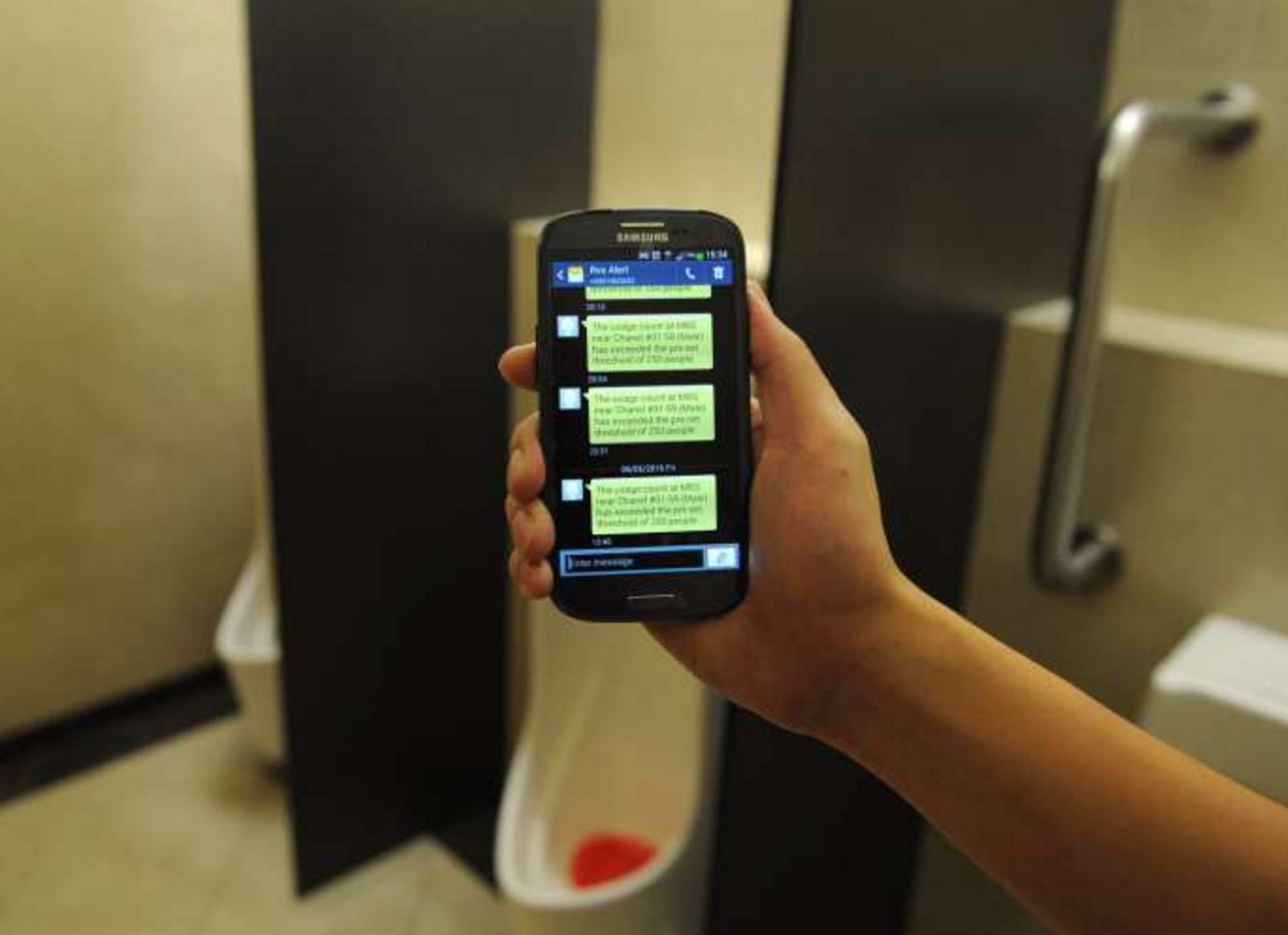
    The Restroom Visitilizer System tracks how heavily toilets are used, and has a sensor to measure the odour levels of things like ammonia and hydrogen sulphide. The information is then sent to a portal that can be accessed through laptops and smartphones (above). ST PHOTOS: AZMI ATHNI

    The Restroom Visitilizer System (above) tracks how heavily toilets are used, and has a sensor to measure the odour levels of things like ammonia and hydrogen sulphide. The information is then sent to a portal that can be accessed through laptops and smartphones. ST PHOTOS: AZMI ATHNI


    Research engineers from the Agency for Science, Technology and Research (A*Star) have invented a toilet-monitoring system that can signal when toilets need to be cleaned.
    The system tracks how heavily restrooms are used, and has a sensor to measure the odour levels of things like ammonia, which is found in urine, and hydrogen sulphide, which is found in faeces.
    The technology, called the Restroom Visitilizer System, has been on trial in more than 60 public toilets islandwide over the past two years, in places like Marina Bay Sands (MBS), the Singapore Zoo and River Safari.
    Toilets at nine food centres, such as the Tiong Bahru, Maxwell and Serangoon Gardens food centres, were included, too.
    The system, developed in 2013, has now been licensed to Convergent Smart Technologies, a local small and medium-sized enterprise.
    Its director Cedric Hoon said the system has received good reviews from cleaning contractors. It costs about $1,700 to $2,000 to install a set of sensors for two toilets.
    TIME, MANPOWER SAVINGS
    One cleaner can take care of more toilets - some which aren't so heavily used - and he doesn't have to walk around to physically check the toilets.
    MR DENNIS QUEK, industry development manager at A*Star's Institute for Infocomm Research, on increased productivity.
    Mr Dennis Quek, industry development manager at A*Star's Institute for Infocomm Research, said public toilets are typically cleaned at regular intervals several times a day, regardless of how frequently they are used. Some cleaning firms also act on complaints, most of which are about smell, he added.
    Mr Hoon said cleaners have a roster for them to go and check the toilets up to six times a day, leading to manpower wastage.
    Restrooms in shopping malls can be used by up to 300 people an hour; in food centres, the rate hovers at about 100 to 150 an hour.
    The new technology offers a "clean on demand" option, allowing supervisors to deploy resources more efficiently, said Mr Quek.
    Based on the toilets that tested the system, there was a 30 per cent improvement in manpower productivity, he said. "One cleaner can take care of more toilets - some which aren't so heavily used - and he doesn't have to walk around to physically check the toilets."
    Instead, on-demand alerts can be sent by SMS to cleaners if a particular toilet needs immediate attention.
    To encourage more building owners to adopt the system, Convergent Smart Technologies signed an agreement this year with the Restroom Association (Singapore), or RAS.
    RAS executive director Emerson Hee said the association is urging building owners to adopt the technology to better maintain toilet cleanliness, and meet higher standards, as part of its six-star rating system, introduced in November 2014.
    An MBS spokesman said the integrated resort is constantly looking at ways to improve productivity with the use of technology.
    It installed the sensor system in 10 toilets, and plans to install it in another 26 this year.
    Adopting the technology "will allow our cleaning supervisors to monitor the restrooms in real time, so as to improve response time and prioritise duties", she said.
    "Another benefit is that it will enable us to plan and better manage our manual resources and consumables inventory," she added.
    A spokesman for the National University Hospital Kopitiam foodcourt, which installed the system in December last year - the first foodcourt in Singapore to do so - said the gadget is a convenient way of obtaining "relevant real-time information" on usage and odour levels in toilets.
    "This is essential for the deployment of toilet cleaners, and it also helps monitor the amount of time they need to clean up, especially during periods of heavy usage," he said.
    "Furthermore, these statistics allow NUH to monitor our toilet usage and staff deployment. It also helps us to become more efficient, and enjoy cost savings on labour."

    source: http://www.straitstimes.com/singapore/environment/new-gadget-sniffs-out-when-toilets-need-cleaning
    by Amelia Teng

    http://www.thisoldtoilet.com

    Wednesday, May 18, 2016

    Toilet Replacement Lids and Seats - Do bears, er, go in the woods? - This Old Toilet 800-658-4521


    Image result for bear and an outhouse


    Finally, after decades of research, we have the answer to what was thought to be a rhetorical question: Do bears, er, go in the woods?
    The answer came after an incident on May 23, leaving the world stunned: Not if there’s an alternative.
    A bear in the woods near Winnipeg, Ontario, chose an outhouse over the great outdoors but – surprise! – there was a human inside.
    Apparently in urgent need of the facilities, the black bear grabbed 65-year-old Gord Shurvell by the back of his pants, which were at the time around his ankles, and dragged him from the wooden outhouse toward the woods.
    Well, unless there was an outline of a human figure on the outhouse door, you can hardly blame the bear. How was he to know?
    And, too, Shurvell may be partially to blame since he decided to leave the outhouse door open as he sat there, watching the beautiful scenery, which just happened to be concealing a bear with mayhem on its mind.
    A friend who was with Shurvell at the fishing camp heard him scream and rushed to his aid, shooting at the bear. Shurvell escaped with a puncture wound in the back of his head, along with cuts and bruises on his body, but the news accounts don’t say where.
    One reporter, apparently an investigative journalist more highly paid than I am, was able to determine that, no, Shurvell had nothing “scared out of him.” A Pulitzer is on its way.

    source: http://www.enewscourier.com/opinion/columns/toilet-humor-isn-t-funny-but-toilet-news/article_ed03256e-9392-5ea6-b2ff-4c6ba35a6056.html
    http://www.thisoldtoilet.com

    Wednesday, May 11, 2016

    Toilet Replacement Lids and Seats - Toilets that clean themselves catching on in Japan - This Old Toilet 800-658-4521


    Japan is well-known for its highly functional toilets with their built-in bidets, but lately they have become even more pleasant to use. The newest models not only clean your posterior, they also clean the toilet bowl by such means as a special ceramic product and water.


    A Western-style flush toilet was first manufactured in Japan by the predecessor of TOTO Ltd. in 1914. A predecessor of Lixil Corp. began sales of the first domestic toilet seats with built-in bidets for households in 1967, based on a Swiss-made toilet used in hospitals.
    From then on, toilets with integrated bidets gradually became widely accepted in Japan. According to a Cabinet Office survey, such toilets were installed in about 77 per cent of houses in this country as of March 2015.
    Shiohiko Takahashi, a professor emeritus at Kanagawa University who chairs the Japan Toilet Association, said: "The Japanese like to keep things neat. Water supply and sewerage systems are relatively well maintained, which bolstered the idea of washing your posterior with water."
    In Japan, toilets are kept separate from the bath in many households, meaning the power source of sophisticated toilets does not get wet. In addition, soft water is used to flush the toilet, meaning that its spray nozzle does not become clogged with minerals, unlike hard water. These factors have helped make this type of toilet more popular in Japan.
    Self-cleaning system
    Makers are now focusing on toilets that automatically clean themselves.
    In April, Lixil released its New Satis model (S$4,000) excluding tax), which uses a special ceramic product to clean the basin - water flows underneath filth on the ceramic surface and lifts it up. Also, water flows out from three places in the basin, helping the toilet flush with a limited amount of water.
    "Cleaning toilets is hard work. We developed the model in response to appeals from elderly people and couples who both work," a Lixil spokesperson said.
    TOTO's Neorest Hybrid series uses hypochlorous acid, which is produced by decomposing tap water through electrolysis. The solution is sprayed onto a basin before and after toilet use to break down and remove stains.
    The ceramic basin is specially glazed to resist stains. The Neorest series' highest-grade model, which was released in February 2015, is equipped with a filter to eliminate ammonia, a cause of foul odour.
    To reduce urine-derived stains, Panasonic Corp. released its A・La・Uno New type  in June 2014. A company spokesperson said the company believes urine is "the main cause of dirty toilets."
    The water level in the basin lowers when the lid opens, and a cleanser foam appears on the water's surface to keep urine from spattering. The edge of the basin swells by three millimeters in a bid to keep urine inside the bowl. The basin is made of resin with a smooth surface, so stains are less likely to collect on the basin.
    These models are not only installed in newly built houses but also when houses are renovated.
    Toilets a draw for tourists
    Japanese toilets have received a great deal of attention overseas and are even a popular item for foreigners who go on shopping sprees when they visit Japan.
    TOTO questioned about 150 foreign tourists in Tokyo and Kyoto in 2015, and learned that 56.5 per cent of them looked forward to using toilets at their accommodation in Japan, a figure close to the 57.8 per cent who ranked "service" as their top expectation.
    The survey indicated that a toilet is considered more important than meals and rooms during their visit. Japan's sophisticated toilets apparently are seen as a symbol of "omotenashi," traditional Japanese hospitality.
    At major home appliance retailers, toilet seats with built-in bidets that can be installed on existing lavatory basins sell well among foreign visitors. In fiscal 2015, the sales volume of Panasonic's model, quintupled from a year earlier.

    source: http://news.asiaone.com/news/asia/toilets-clean-themselves-catching-japan
    http://www.thisoldtoilet.com


    Wednesday, May 4, 2016

    Toilet Replacement Lids and Seats - 5 Things to Know Before Buying a Toilet - This Old Toilet 800-658-4521


    Glow-in-the-dark seats, throne height, and built-in bidets are three reasons you may want to upgrade


    1. Get Some Glow When You Go

    The Japanese manufacturer Toto leads the “smart toilet” trend with its Toto Washlet, a remote-controlled bidet with a wand that provides a warm flow of cleansing water. That luxury doesn’t come cheap: Washlet-equipped models start at $1,188. (Our top-rated standard toilets cost $100 to $350.) Toto’s Neorest 750h adds a bacteria-zapping ultraviolet light that’s activated when the lid is closed. It costs an eye-popping $10,200.
    The Kohler Veil, $4,275, part of its Intelligent line, has a built-in bidet and ultraviolet light, plus a lid that closes automatically. Kohler also offers several “touchless toilets” that you flush by holding your hand over a sensor.
    Not ready to spend top dollar on a high-tech toilet? The Night Glow Seat is a glow-in-the-dark seat that sells for just $50.

    2. Water Misers Mean Well

    You may remember the euphemism “dropping the kids off at the pool.” That was before a 1995 federal standard limited toilets to 1.6 gallons per flush (gpf), down from the 4 and 5 gallons that made for more pool-like conditions. Many 1.6 gpf and even some 1.28 gpf toilets got the job done in one flush in our toilet tests.
    Dual-flush toilets have two modes: partial and full flush. New models use as little as 1 gallon in partial mode (for liquids). The Glacier Bay Dual Flush N2316 (Home Depot), $100, did best in our tests. But other dual-flush models lacked power, so you could end up having to flush twice.
    What you need to know when buying a toilet

    3. The ‘Porcelain God’ Becomes Sculptural

    Bathtubs led the bathroom design revolution, taking on sculptural forms and unexpected materials, including wood and copper. Toilets are now getting their turn. Consider the Kohler Numi, $6,388, with its clean lines and illuminated panels. Or a one-piece toilet, a more reasonably priced option that combines tank and bowl in a single molded piece. It was chosen by almost half of all designers last year. Kohler’s Santa Rosa K-3810, $300, aced our tests, though it was a bit noisy.

    4. New Meaning for ‘Sitting on the Throne’

    Chair-height or comfort-height commodes sit about 17 to 19 inches high, 2 or 3 inches higher than traditional toilets. More than 80 percent of toilets selected by professional designers in 2015 were chair height, according to the National Kitchen & Bath Association. Most winners in our tests were, too, including our top pick, the St. Thomas Creations Richmond ECO, $350.

    5. Off-the-Wall Designs

    Wall-hung toilets are popular in Europe, where their compact design is suited to smaller bathrooms. The tank sits behind the wall, saving 9 to 12 inches of floor space and making the floor beneath easy to clean. Now they’re catching on in the U.S. One caveat: You have to buy a separate carrier system that mounts to the wall and holds the tank, bowl, and flush activator. So expect to spend at least $1,000 on a wall-hung toilet, not including installation. We haven’t tested any in our labs yet.
    source: http://www.consumerreports.org/toilets/5-things-to-know-before-buying-a-toilet/
    by Daniel DiClerico
    http://www.thisoldtoilet.com